
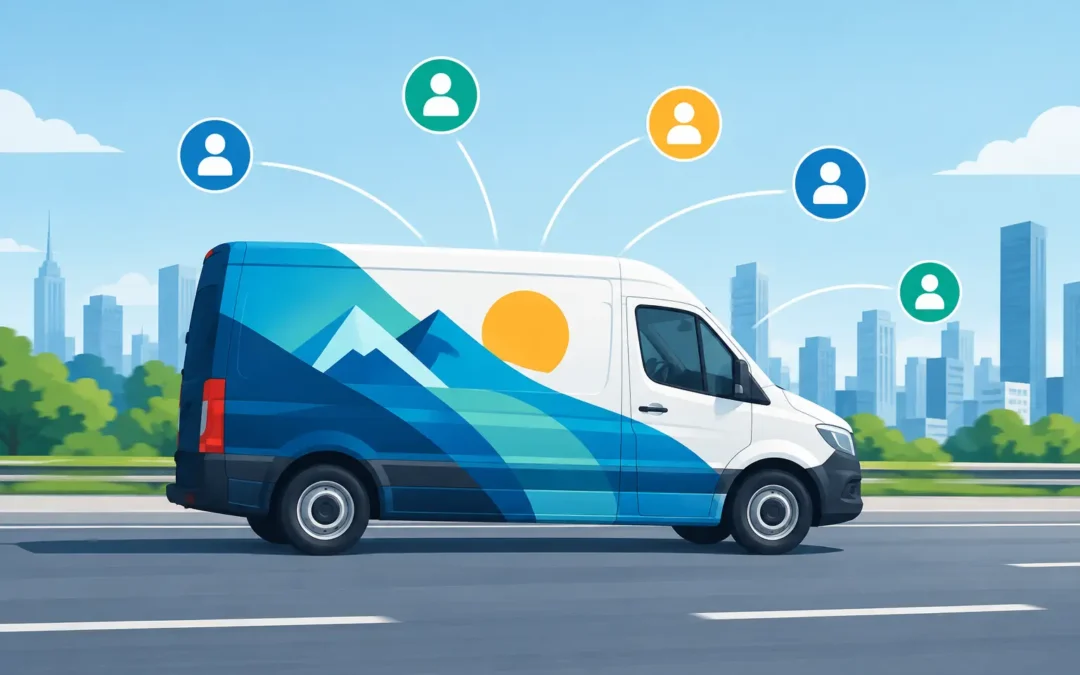
A service van parked at a job site, a delivery car moving through South Beach, or a fleet vehicle stopped in Miami traffic has something most ads do not: repeated local exposure. Vehicle graphics put your name, offer, and contact details in front of people where they live, work, shop, and make purchasing decisions.
For restaurants, real estate teams, contractors, retailers, hospitality operators, and event businesses, the right vehicle treatment makes every route work harder. The goal is not to cover every inch with information. It is to create a clear, professional message that can be understood in seconds.
Choose Vehicle Graphics for the Job
The best option depends on how often the vehicle is used, how long the message needs to remain in place, the surface being covered, and the level of visual impact you need. A single sales vehicle and a 20-vehicle service fleet should not automatically use the same solution.
Car magnets for flexibility
Car magnets are a practical choice for businesses that use personal vehicles, temporary promotions, or part-time delivery teams. They can be applied for work hours and removed afterward, which helps keep a personal car separate from a business identity.
They work best on clean, flat metal panels and should be removed periodically for cleaning. Magnets are not the right fit for aluminum, fiberglass, heavily curved surfaces, or vehicles that need a permanent, full-coverage look. Still, for a fast and cost-conscious local branding tool, they deliver strong value.
Vinyl decals and lettering for daily visibility
Cut vinyl lettering and printed decals are ideal when you need a durable, focused message. A company name, phone number, website, license information, logo, or service list can be placed on doors, rear panels, windows, or tailgates without changing the entire appearance of the vehicle.
This format works especially well for contractors, cleaners, landscapers, home-service companies, and real estate professionals. It is also easier to update than a complete wrap when a phone number, service area, or campaign changes.
Partial graphics and wraps for bigger impact
A partial wrap uses large printed elements across selected areas of the vehicle, such as the sides, hood, rear, or cargo panels. It creates a higher-impact presentation than small decals while usually requiring less material than a full wrap.
Full wraps offer the most visual control. They can transform a vehicle into a mobile campaign using branded color, photography, patterns, and oversized messaging. They are a smart investment for high-mileage fleets, tour vehicles, hospitality shuttles, promotional activations, and brands competing in visually crowded markets.
The trade-off is simple: more coverage requires more design planning, material, installation time, and budget. If your vehicles spend most of their time in a garage or only make occasional short trips, bold door graphics may generate a better return than a full wrap.
Design Vehicle Graphics People Can Read at a Glance
A vehicle is not a brochure. Most people see it while driving, walking, or waiting at a light. Your message has to land quickly, often from a distance.
Start with one priority: what should someone remember after seeing the vehicle for three seconds? For many businesses, that is the company name and what it does. For others, it may be a memorable offer, neighborhood focus, or a phone number that is easy to recall.
Keep the main message large. A logo placed too small, a thin typeface, or a long paragraph of services may look acceptable on a computer screen but disappear on the road. Strong contrast matters just as much. Dark text on a dark vehicle, or a busy image behind essential contact information, creates unnecessary friction.
A useful layout often includes your logo, a short description of your service, one primary contact method, and a visual element that reinforces the brand. For example, a plumbing company may lead with its name, an emergency-service statement, and a large phone number. A restaurant delivery vehicle may prioritize its logo, cuisine type, and ordering information.
Avoid trying to fit every capability onto the doors. A long list of services, multiple phone numbers, several web addresses, and tiny social media icons compete for attention. Give customers one clear next step.
Make the rear panel count
The back of a vehicle is often the longest viewing opportunity because drivers sit behind it in traffic. Use that space for a simple, readable call to action. A phone number, short web address, QR code, or statement such as “Order Catering” can work well when it is large enough to scan safely at a stop.
QR codes deserve a practical test. They should be large, high-contrast, and linked to a mobile-ready page with one relevant action. A code that sends customers to a generic homepage or an outdated promotion wastes valuable space.
Materials and Installation Affect the Finished Result
Professional vehicle graphics are not just a design file applied to paint. Material choice, lamination, surface preparation, and installation technique all affect appearance and longevity.
High-quality vinyl is designed to handle sun, rain, road debris, and regular washing. In Miami, heat, humidity, salt air, and intense UV exposure make material selection especially important. A low-cost graphic may look acceptable on day one, then fade, lift, or crack far earlier than expected.
Before installation, the vehicle must be thoroughly cleaned and free from wax, dirt, residue, and surface contaminants. Graphics applied over damaged paint, deep rust, or loose clear coat can fail because the surface beneath them is unstable. If a vehicle needs bodywork, complete that work before committing to graphics.
Installation also requires careful planning around door handles, trim, seams, sensors, windows, and body contours. Experienced installers know where a design can be adjusted without compromising readability and how to avoid awkward cuts that make a premium brand look rushed.
Ask for a proof that shows the design on the actual vehicle model whenever possible. A logo that looks centered on a flat layout can sit too low on a door or get interrupted by a handle once it is applied. Reviewing placement before production protects your budget and reduces last-minute surprises.
Build a Fleet System, Not a Collection of One-Off Designs
For businesses with multiple vehicles, consistency is part of the value. A customer should recognize your company whether they see a compact sales car, a cargo van, a box truck, or a delivery SUV.
Create a core system with approved logo placement, brand colors, fonts, service language, and contact details. Then adapt that system to each vehicle size. This keeps the fleet recognizable without forcing the same layout onto every panel.
Corporate teams should also define who approves artwork and how updates are managed. When field offices, franchise locations, or employees order independently, outdated logos and mismatched colors can spread quickly. A centralized proofing process keeps vehicle graphics aligned with the rest of your printed marketing, from business cards and flyers to signs and event displays.
Sobe Express can support businesses that need professional design guidance, print production, and clear proof approval without adding a long vendor-management cycle to an already busy schedule.
Plan for Care, Changes, and Removal
Vehicle graphics need routine care, but the process is straightforward. Hand washing is generally the gentlest option. If you use an automatic wash, follow the material and installer recommendations, especially around graphic edges. Avoid harsh chemicals and high-pressure water directed closely at seams.
Inspect graphics periodically for lifting corners, scratches, or damage from road conditions. Fixing a small edge issue early is usually easier than replacing an entire panel later. Keep a record of approved artwork and production specifications, too. If a new vehicle joins the fleet after six months, you will be able to match the existing look instead of starting over.
When a campaign ends or a vehicle is sold, professional removal protects the paint and avoids the residue, tearing, and uneven appearance that can come from rushing the job. Permanent branding should be chosen with the expected vehicle ownership period in mind.
Need it fast? Start with the vehicle, the business goal, and the one message customers need to see first. A focused design and top-quality production can turn routine miles into local visibility that keeps working long after the vehicle leaves the lot.
Recent Comments