
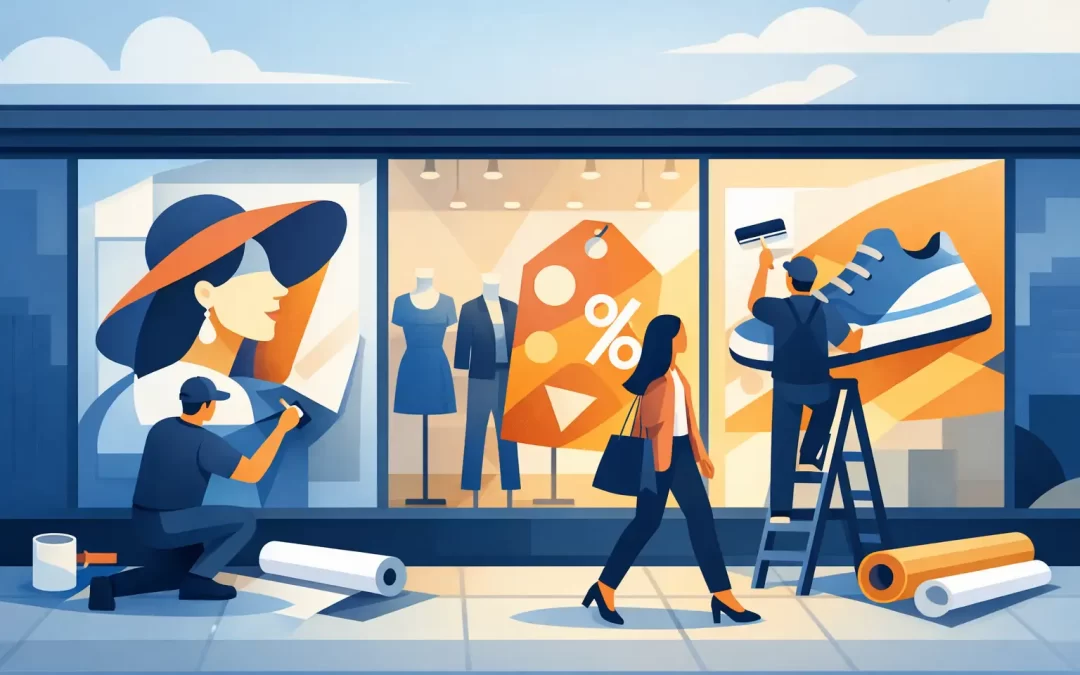
A busy storefront has only a few seconds to earn attention. A passerby may not know your name, your price point, or what is happening inside, but they will notice a clear offer, a striking product image, or a well-placed event message on the glass. That is what makes retail window graphics printing one of the most practical tools in a storefront marketing plan.
For Miami Beach retailers, restaurants, salons, real estate offices, hospitality businesses, and pop-up brands, windows are valuable advertising space already built into the location. The right graphic can announce a grand opening, promote a seasonal menu, support a sale, create privacy, or simply make the storefront look more polished and easier to find.
Start With the Job Your Window Needs to Do
The strongest window graphics do not try to say everything. They give the customer one immediate reason to stop, enter, call, scan, or remember the business. Before choosing material, size, or color, decide what result the graphic needs to produce.
A boutique preparing for a holiday rush may need bold sale messaging visible from across the street. A restaurant may need to feature happy hour times, delivery options, or a limited-time menu. A real estate professional may need clean property branding and contact information that remains visible without blocking the office interior. For a hotel, spa, or fitness studio, frosted graphics can add privacy while keeping the space bright and professional.
This is where many window projects lose impact. The artwork looks attractive on a computer screen but does not answer the customer’s first question: “Why should I walk in?” Make the primary message large, direct, and readable. Secondary details such as hours, social handles, service lists, or disclaimers should support the main offer, not compete with it.
Choosing Materials for Retail Window Graphics Printing
Not every window graphic should use the same film. The best choice depends on visibility, permanence, sunlight exposure, installation surface, and whether the promotion will change next month or remain in place for years.
Full-Color Vinyl for Promotions and Branding
Vinyl window graphics are a reliable choice for bold logos, product photography, sale announcements, and large-format branded displays. They can be printed in rich color and cut to custom shapes, making them useful for storefronts that need to stand out in high-traffic areas.
For short-term promotions, removable vinyl is often the smart move. It allows businesses to update messages without committing to a permanent installation. For long-term branding, a more durable adhesive option may be worth the investment. The trade-off is simple: stronger adhesion generally supports longer use, while removable materials make seasonal changes easier.
Perforated Window Film for Visibility From Inside
Perforated window film creates a full graphic on the outside while allowing people inside to see through the window. It works especially well for restaurants, retail shops, fitness studios, and businesses with large street-facing glass that want advertising impact without closing off the interior.
It is not the right material for every message. Fine print, small type, and highly detailed imagery can lose clarity in the perforation pattern. Keep designs bolder than you would for solid vinyl, and make sure important copy has enough size and contrast to read from the sidewalk.
Frosted Film for Privacy With a Premium Look
Frosted window graphics are a top choice for offices, spas, clinics, conference rooms, salons, and professional service businesses. They reduce direct visibility while allowing natural light to pass through. A frosted logo, patterned band, or custom-cut design can make a plain glass door look intentional and high-end.
This option is less about a hard-selling offer and more about atmosphere, privacy, and brand presentation. It can still include business names, directional information, or service categories, but its real strength is creating a finished, professional environment.
Design for the Sidewalk, Not the Screen
A window graphic must work at real viewing distance. Customers may see it while walking, driving, waiting at a light, or crossing the street. That changes how the design should be built.
Start with a single headline or offer that can be understood quickly. “Now Open,” “Happy Hour 4-7 PM,” “Lease This Space,” or “20% Off This Week” often performs better than a paragraph of brand language. Use high-contrast colors, especially when the window faces direct sun or reflects a bright street scene.
Typography matters just as much. Thin scripts and small text may look sophisticated in a proof, but they can disappear against interior lighting, reflections, or a busy background. Use clean, readable fonts and give important information room to breathe.
Images should be high resolution and selected for impact. A blurry phone photo enlarged across a storefront will weaken even the best promotion. Professional print production needs files that can hold up at large scale. If the artwork is not ready, in-house design support can help turn a rough concept, logo, photo, or campaign idea into a print-ready graphic.
Plan Around Sun, Glass, and Installation
Storefront conditions affect how a graphic performs. South Florida sunlight is intense, and window orientation matters. Graphics in direct sun may need color choices and material recommendations that account for fading, glare, and heat. A dark design can look dramatic, but it may also make an interior feel less open if it covers too much glass.
Measure every panel carefully, including door handles, frames, mullions, locks, and existing decals. A graphic that looks centered in a digital mockup can become awkward if it lands across a handle or splits an important word at a window seam. For multi-panel storefronts, treat the full facade as one visual field while planning each panel precisely.
Clean installation is equally important. Dust, moisture, surface texture, and old adhesive can interfere with results. If your windows have existing graphics, plan removal before the new installation date. For a major launch, do not leave printing and installation decisions until the morning of the event. Fast turnaround is valuable, but a little planning protects the finished look.
Use Windows to Support the Rest of Your Marketing
Window graphics work best when they match what customers see after they walk inside. If the glass promotes a grand opening, your counter signage, menus, flyers, and staff talking points should reinforce that same message. If the window advertises a seasonal offer, make sure the offer is available and easy to understand at checkout.
This consistency matters for multi-location brands, corporate teams, and franchises. Approved templates, consistent logo usage, and controlled ordering help every location present the same campaign correctly. It also reduces the last-minute back-and-forth that can delay a promotion.
For local businesses with urgent needs, speed can be a competitive advantage. A restaurant announcing a weekend special, a retailer responding to a holiday rush, or an event organizer promoting a same-week activation needs a print partner that can move from file review to finished graphics without unnecessary delays. Sobe Express provides hands-on production support for businesses that need polished materials fast, including qualifying same-day in-store pickup orders placed by 11 a.m.
When to Refresh Your Storefront Graphics
Permanent logo graphics may stay in place for years, but promotional messaging should not become background noise. If customers have seen the same sale sign for months, they stop noticing it. Refresh graphics around new inventory, holidays, events, menu changes, lease opportunities, and major service launches.
That does not mean replacing everything constantly. Keep your core brand elements consistent, then use removable graphics, decals, or smaller window sections for timely messages. This approach controls costs while giving customers a reason to look again.
Before sending a file to print, stand outside your storefront and view the window as a customer would. Identify the best sightline, choose one message worth noticing, and build the graphic around it. Your glass is already there – put it to work.
Recent Comments