
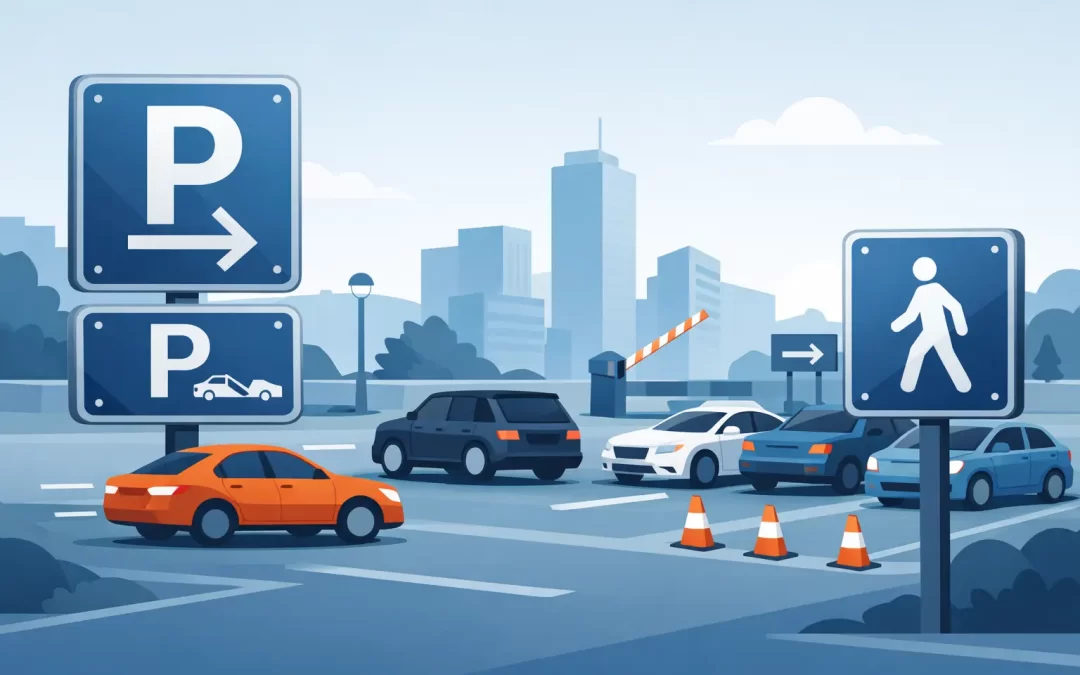
A crowded lot can turn into a customer-service problem before anyone reaches your front door. Aluminum parking signs give drivers clear direction at the exact moment they need it: where to enter, where to park, what spaces are reserved, and what rules apply. For Miami Beach businesses, property managers, restaurants, hotels, retail centers, and event teams, a well-made sign is a practical way to protect access, reduce confusion, and present a more organized property.
Why Aluminum Is a Smart Choice for Parking Signs
Parking signage works hard. It sits in direct sun, heavy rain, humidity, salt air, vehicle exhaust, and constant visual competition from storefronts, traffic, and neighboring properties. Paper notices, temporary boards, and low-cost plastic signs may handle a short-term need, but they can quickly look faded, warped, or unofficial.
Aluminum offers a stronger long-term solution. It is lightweight enough for straightforward mounting while providing the rigidity needed for outdoor use. It will not rust like untreated steel, making it especially useful in coastal environments where moisture and salt can be tough on exterior materials. A professionally printed aluminum sign also keeps its crisp, polished look far longer than a taped-up notice or a hand-lettered board.
The material is only part of the result. Clear layout, high-contrast color, legible type, and proper placement determine whether a driver understands the message in seconds. The best signs are direct because parking decisions happen fast.
Match the Message to the Parking Situation
Not every lot needs the same sign. A small salon may only need customer parking and tow-away notices, while a hotel may need a complete system for guest parking, valet lanes, deliveries, employee spaces, accessible parking, loading areas, and entrances. Start with the actual friction points on your property.
Reserved parking signs are a simple example. A sign that says “Reserved” may work for a single executive space, but it is not specific enough for many businesses. “Client Parking Only,” “Tenant Permit Required,” or “Restaurant Pickup Parking – 15 Minutes” tells drivers what the space is for and helps staff enforce the rule consistently.
For private lots, parking restriction signs should state the rule plainly. If towing is part of your policy, make sure the wording, contact information, and placement align with applicable local requirements. This is one area where design should not replace accuracy. A sharp-looking sign is valuable, but a sign with incomplete or unclear information can create unnecessary disputes.
Directional signs are equally useful. Arrows for entrance, exit, valet, loading, delivery, and overflow parking reduce hesitation at busy access points. For event venues and temporary activations, directional aluminum signs can keep arrivals moving without requiring staff members to answer the same question all day.
Design Aluminum Parking Signs for Fast Reading
A parking sign is not a brochure. Drivers should be able to understand the core message at a glance, often from a moving vehicle. That means the design needs to prioritize hierarchy over decoration.
Put the most important instruction first. If the message is “No Parking,” those words should be the largest element. Supporting details, such as hours, permit restrictions, vehicle limits, or towing information, can appear below in smaller type. Trying to give every line equal weight makes the sign harder to read.
Color should reinforce the instruction. Red is widely associated with restrictions and prohibitions, while blue often supports accessible parking or informational messages. Yellow can signal caution, such as loading or temporary limitations. Brand colors can be included, especially on guest or customer parking signs, but they should never weaken contrast or make essential text difficult to see.
Use recognizable symbols when they add clarity. An accessible parking symbol, directional arrow, or no-parking icon can speed up recognition for drivers. Still, symbols work best alongside concise text when enforcement or detailed conditions are involved.
Size Depends on Viewing Distance
A sign at a building entrance has a different job than one positioned at the far end of a lot. Smaller signs can work for close-range rules on posts, gates, or individual spaces. Larger formats are better for entrances, roadway direction, and areas where drivers need to make a decision before passing the sign.
Mounting height matters as much as sign size. A professionally produced message can be missed if it sits behind landscaping, parked vehicles, or a poorly placed pole. Walk or drive the property from the visitor’s perspective before finalizing placement. If drivers routinely stop to ask where to go, the issue may be visibility rather than the wording itself.
Keep Brand Standards Without Losing Clarity
For multi-location businesses, property groups, and corporate teams, parking signage is part of the customer experience. Consistent logos, colors, type, and sign formats make a property feel managed and credible. They also make replacement orders easier when a sign is damaged, a rule changes, or a new location opens.
That consistency should not come at the expense of usability. The parking instruction must remain more prominent than the logo. A sign can support your brand while still being unmistakably practical.
Plan for Installation Before Ordering
The right aluminum parking sign also needs the right installation approach. Decide whether signs will mount to existing poles, walls, fences, gates, or dedicated signposts. Mounting holes, corner placement, and overall dimensions should match the installation location before production begins.
For standard parking areas, rounded corners are often a smart detail. They create a finished appearance and reduce sharp edges during handling and installation. If a sign will be mounted on a pole, pre-drilled holes can save time and help crews install a full set of signs consistently.
Consider the surrounding conditions, too. A sign near a waterfront property, pool deck, busy loading lane, or high-traffic curb may need more frequent cleaning and inspection than a sign under a covered garage. Aluminum is durable, but no exterior sign is completely maintenance-free. Checking for loose hardware, blocked visibility, and outdated rules helps preserve the investment.
When Custom Signs Beat Off-the-Shelf Options
Standard parking signs are useful when the message is universal. However, custom aluminum parking signs are usually the better fit when your operation has property-specific rules, branded visitor policies, multiple languages, special event instructions, or detailed directional needs.
A custom approach also lets you create a system rather than ordering one-off signs over time. For example, a medical office complex may use matching signs for patient parking, staff parking, accessible spaces, deliveries, building numbers, and entrance directions. A retail center may need signs that identify tenant pickup zones, fire lanes, short-term parking, and rear access. When all pieces use the same visual structure, drivers can scan the lot more easily.
For recurring programs, it helps to keep approved artwork and specifications on file. Corporate teams can use controlled templates so local managers can update location names, parking numbers, or contact details without changing the core brand. That reduces ordering mistakes and helps every site maintain the same professional standard.
A Practical Ordering Checklist
Before sending artwork to print, confirm the message, size, quantity, mounting method, and intended location. Also review all dates, phone numbers, suite numbers, permit requirements, and towing language carefully. Small errors on a parking sign can create large operational headaches.
If you do not have finished artwork, start with the information drivers must see first, then build the design around it. An in-house design team can help turn a rough idea, an existing logo, or an outdated sign into a cleaner production-ready file. This is especially useful when you need multiple sign types that must look coordinated.
Need signs for an opening, property turnover, event, or urgent operational change? Sobe Express combines fast production with hands-on support, helping Miami Beach businesses move from approved artwork to professionally produced signage without adding unnecessary vendor delays.
A parking lot may not be the first place customers form an opinion about your business, but it is often the first place they make a decision. Give them a clear next step, keep traffic moving, and let your property look as organized as the business behind it.
Recent Comments